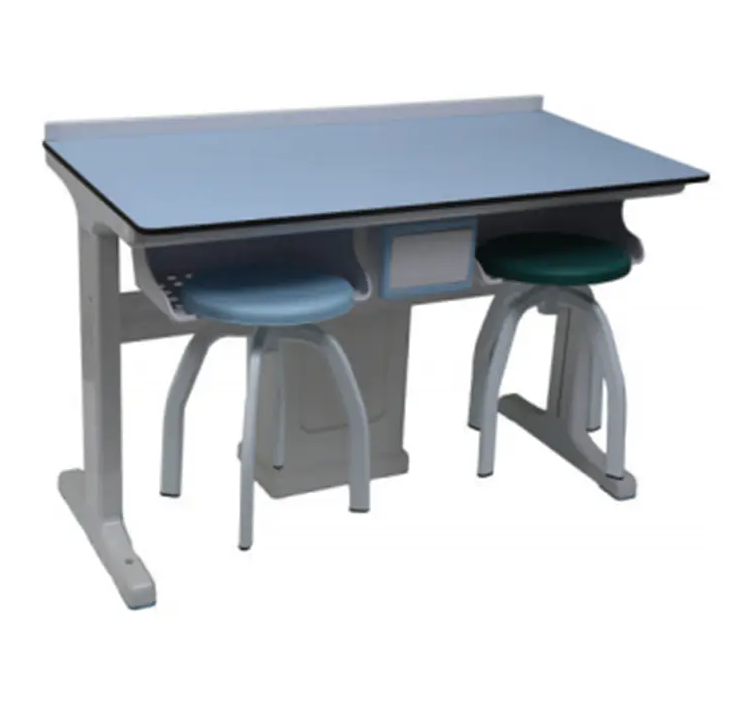
Scientists, technicians, and researchers spend long hours perched at laboratory benches performing tasks that demand both physical stability and precise hand control. The laboratory stool supporting that work is rarely the subject of much discussion — until back discomfort, fatigue, or an unstable seating position starts affecting concentration and accuracy. A well-specified laboratory stool is not a luxury accessory but a functional tool that shapes the physical experience of every hour spent at the bench.
Seat materials across the laboratory stool category reflect the chemical exposure conditions of different working environments. Polyurethane foam seats with vinyl or polyurethane upholstery resist most common laboratory reagents, clean easily with standard disinfectants, and maintain their cushioning properties through years of daily use. ESD-dissipative seat materials are specified for electronics laboratories and cleanrooms where electrostatic discharge poses a risk to sensitive components or processes. Molded polypropylene seats without upholstery suit environments where liquid spills are frequent and fabric seating would absorb contamination — these hard seats sacrifice cushioning comfort for hygienic practicality in wet chemistry or microbiology settings.
Base configuration choices shape both stability and mobility. Five-star bases on castor wheels allow the laboratory stool to be repositioned across the floor with minimal effort, useful in larger labs where users move between multiple workstations. Four-leg stools without castors provide a fixed, stable platform preferred in settings where uncontrolled movement of seating creates safety concerns. Footprint diameter relative to seat height matters for tip resistance — a laboratory stool with a narrow base and high seat elevation requires a wider star diameter to maintain safe stability under dynamic loading.

 English
 Arabic
 French
 Spanish
 Portuguese
 Deutsch
 Dutch
Dutch
 Italiano
 Russian
 Romaian
 Portuguese (Brazil)
 Greek
Greek