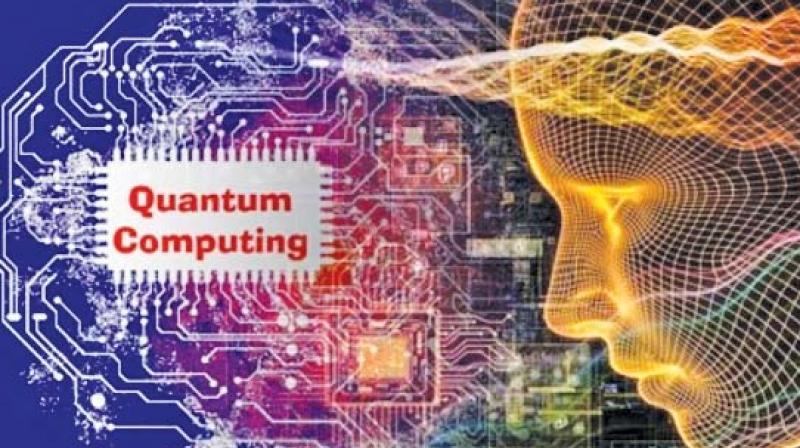
The dawn of the quantum era is creating one of the most profound technological shifts in generations, giving rise to a complex and rapidly evolving global Quantum Computing Industry. Unlike classical computing, which uses bits representing 0s or 1s, quantum computing harnesses the bizarre principles of quantum mechanics, using "qubits" that can exist in a superposition of both states simultaneously. This fundamental difference allows quantum computers to perform certain types of calculations at speeds exponentially faster than any supercomputer imaginable. The industry's mission is to build, operate, and provide access to these revolutionary machines, developing the full hardware and software stack required to solve problems currently considered intractable. This includes everything from designing new drugs and materials at the molecular level to optimizing global financial systems and breaking today's most secure encryption, heralding a new paradigm in computational science and business strategy.
The industry's ecosystem is built upon a foundational layer of hardware manufacturers who are pioneering different physical approaches to creating stable and scalable qubits. This segment is a hotbed of deep-tech innovation, with major players and startups pursuing various modalities. Tech giants like Google and IBM are focused on superconducting circuits, which require cryogenic temperatures. Others, like IonQ and Quantinuum (formerly Honeywell Quantum Solutions), are leaders in trapped-ion technology, which uses electromagnetic fields to suspend and manipulate individual ions. Meanwhile, a third wave of companies, such as PsiQuantum, is pursuing a photonics-based approach, using particles of light as qubits. The intense competition and rapid progress across these different hardware platforms are a defining characteristic of the industry, as each method has its own unique set of advantages and challenges related to qubit stability (coherence), fidelity, and scalability.
Building on top of the hardware is the critical software and services layer, which is arguably the most accessible part of the industry today. This segment is focused on creating the tools necessary for developers to actually program these nascent quantum machines. This includes the development of quantum algorithms, programming languages, and software development kits (SDKs) like IBM's Qiskit, Google's Cirq, and Microsoft's Q# and Azure Quantum platform. The dominant business model in this layer is Quantum-as-a-Service (QaaS). Major providers like IBM, Google, Amazon Web Services (AWS), and Microsoft offer cloud-based access to their early-stage quantum processors. This allows researchers, corporations, and academics to experiment with quantum computing without the prohibitive cost and complexity of building and maintaining a quantum computer themselves, dramatically lowering the barrier to entry and accelerating research and development.
The broader industry ecosystem is a powerful collaboration between the private sector, government, and academia. National governments worldwide, including the US, China, and the European Union, are investing billions of dollars through national quantum initiatives, recognizing the technology's immense strategic and economic importance. Universities and research institutions are the primary source of fundamental research breakthroughs and are crucial for training the next generation of quantum physicists and engineers—a critical bottleneck for the industry's growth. Venture capital firms are pouring record-breaking sums into quantum startups, funding the high-risk, long-term R&D required to push the technology forward. This tripartite alliance is essential for navigating the immense technical challenges and long development horizons inherent to building a commercially viable quantum future.
Explore More Like This in Our Regional Reports:
US Remote Infrastructure Management Market Share

 Arabic
 French
 Spanish
 Portuguese
 Deutsch
 Turkish
 Dutch
Dutch
 Italiano
 Russian
 Romaian
 Portuguese (Brazil)
 Greek
Greek