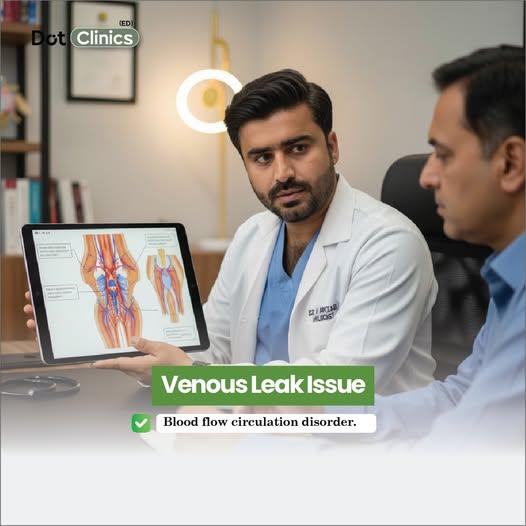
Venous leakage, also known as venogenic erectile dysfunction, is a condition in which the penis is unable to maintain sufficient blood during an erection. Although blood can enter the penile tissues normally, it drains out too quickly through the veins, making it difficult to achieve or sustain a firm erection suitable for sexual activity. This condition is a significant but often misunderstood cause of erectile dysfunction (ED).
What Is Venous Leakage?
In a healthy erection, blood flows into the penile arteries and becomes trapped inside the corpora cavernosa by compression of the veins. This trapping mechanism allows the penis to remain firm. In venous leakage, this mechanism fails, and blood escapes through the veins prematurely, resulting in weak or short‑lasting erections.
Venous leakage is not a disease itself but a functional problem related to blood flow regulation within the penis.
Causes of Venous Leakage
Venous leakage can develop due to multiple physical and psychological factors. Common causes include:
-
Damage to penile tissues from injury or trauma
-
Aging‑related loss of elasticity in penile smooth muscles
-
Diabetes mellitus affecting blood vessels and nerves
-
Hypertension and cardiovascular disease
-
Peyronie’s disease (penile curvature and scarring)
-
Congenital abnormalities of penile veins
-
Hormonal imbalances, especially low testosterone
-
Excessive smoking, alcohol use, or substance abuse
-
Pelvic or prostate surgery
In younger men, venous leakage is sometimes congenital, while in middle‑aged or older men it usually develops gradually due to vascular or metabolic conditions.
Symptoms of Venous Leakage
The most common signs and symptoms include:
-
Difficulty maintaining an erection despite adequate sexual stimulation
-
Erections that are firm initially but soften quickly
-
Better erections while lying down compared to standing
-
Poor response to oral ED medications in advanced cases
-
Normal sexual desire but unsatisfactory performance
It is important to note that venous leakage does not usually affect libido, ejaculation, or orgasm directly.
Can Venous Leakage Happen Suddenly?
Venous leak typically develops gradually over time rather than appearing suddenly. However, it may seem sudden after trauma, surgery, or significant psychological stress. In many cases, the underlying problem has existed for years but becomes noticeable only when erectile function declines.
How Venous Leakage Is Diagnosed
Accurate diagnosis is essential before starting treatment. Common diagnostic methods include:
Medical History and Physical Examination
A detailed discussion of symptoms, lifestyle factors, and medical conditions helps guide further testing.
Penile Doppler Ultrasound
This is the most important test for venous leakage. It measures blood inflow and outflow in the penis after injection of a vasodilator medication.
Dynamic Infusion Cavernosometry and Cavernosography (DICC)
This advanced test evaluates venous pressure and identifies abnormal venous drainage pathways.
Hormonal and Blood Tests
Tests for testosterone levels, blood sugar, and lipid profile help identify contributing factors.
Treatment Options for Venous Leakage
Treatment depends on severity, age, overall health, and response to conservative therapies.
Lifestyle Modifications
For mild cases, lifestyle changes may improve symptoms:
-
Quitting smoking
-
Reducing alcohol consumption
-
Regular exercise
-
Weight control
-
Managing diabetes and blood pressure
Oral Medications
Drugs such as sildenafil, tadalafil, and vardenafil may help in early or mild venous leakage, although their effectiveness is often limited in advanced cases.
Vacuum Erection Devices (VED)
These devices mechanically draw blood into the penis and help maintain erections using a constriction ring.
Injection Therapy
Intracavernosal injections such as alprostadil or combination therapies can produce strong erections by directly relaxing penile smooth muscles.
Low‑Intensity Shockwave Therapy (LI‑ESWT)
Shockwave therapy may improve penile blood vessel function and is sometimes used in selected patients with vascular ED.
Surgical and Advanced Treatments
Venous Ligation Surgery
This procedure aims to block leaking veins. Results vary, and long‑term success is limited, especially in older patients.
Penile Implant Surgery
Penile prosthesis implantation is considered the most definitive and reliable treatment for severe venous leakage when other therapies fail. It provides predictable, long‑lasting results with high patient satisfaction.
Is Venous Leakage Curable?
Venous leakage is generally considered manageable rather than completely curable. Early diagnosis and treatment can significantly improve erectile function. In severe cases, surgical solutions such as penile implants offer a permanent and effective solution.
Prevention of Venous Leakage
Although not all cases can be prevented, the risk can be reduced by:
-
Maintaining good cardiovascular health
-
Controlling diabetes and cholesterol
-
Avoiding smoking and substance abuse
-
Seeking early treatment for erectile problems
When to See a Doctor
Men experiencing persistent difficulty maintaining erections should consult a qualified urologist or sexual health specialist. Early evaluation helps identify reversible causes and prevents progression.
Conclusion
Venous leakage is an important and treatable cause of erectile dysfunction. While it often develops gradually, modern diagnostic tools and treatment options allow men to regain sexual confidence and quality of life. With proper medical guidance, most patients can find an effective solution tailored to their condition.

 English
 Arabic
 French
 Spanish
 Portuguese
 Turkish
 Dutch
Dutch
 Italiano
 Russian
 Romaian
 Portuguese (Brazil)
 Greek
Greek