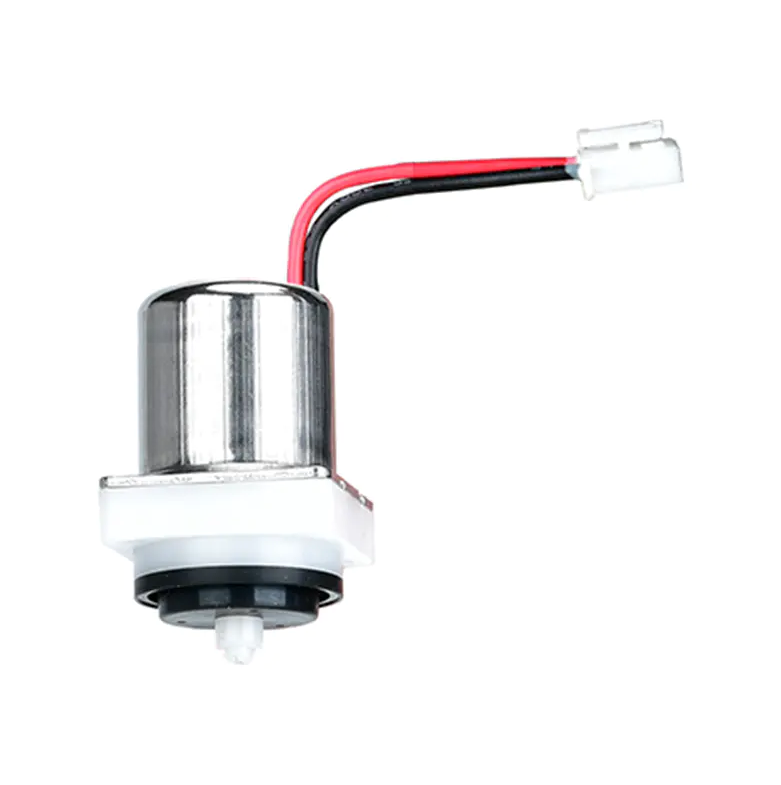
Water distribution systems are no longer limited to manual switches and basic piping arrangements. Automation has become a defining feature in both indoor and outdoor water applications, where precision and timing directly influence comfort and resource efficiency. Within this framework, the Sanitary Ware Solenoid Valve and the Garden Solenoid Valve serve as functional bridges between control signals and actual water movement, enabling systems to respond accurately to user settings or environmental conditions.
In sanitary ware applications, solenoid valves often operate behind the scenes, yet their performance directly affects user experience. Touchless faucets, controlled flushing mechanisms, and temperature-regulated showers all rely on valves that can respond smoothly to electrical commands. A delay or inconsistency in valve action can lead to unstable flow or uncomfortable pressure changes. For this reason, designers tend to favor valves with steady actuation behavior and predictable response times rather than those optimized for rapid cycling.
The internal configuration of sanitary ware solenoid valves reflects this usage pattern. Compact coil designs, carefully sized orifices, and balanced diaphragms allow water to move in a controlled manner. These features help maintain steady flow while reducing noise, which is especially relevant in residential or hospitality environments. The goal is not to draw attention to the mechanism, but to support seamless operation that users barely notice.
Garden solenoid valves, by comparison, operate in environments where visibility is lower but physical demands differ. Irrigation systems often extend across multiple zones, each requiring independent control. Valves in this context must respond reliably to scheduled commands, sometimes after long periods of inactivity. Resistance to sediment buildup and external moisture becomes an important design consideration, as outdoor water sources may carry more impurities than indoor supplies.
Another factor influencing garden valve selection is pressure variation. Depending on layout and elevation, irrigation systems may experience fluctuating pressure levels. A well-designed Garden Solenoid Valve accommodates these changes without compromising sealing performance. This helps prevent unintended leaks or uneven watering, both of which can affect plant health and water usage efficiency over time.
The increasing use of programmable controllers has shifted expectations for both types of solenoid valves. Instead of simple on-off tasks, valves are now part of integrated systems that coordinate water usage across different times and conditions. In sanitary settings, this might involve synchronizing flushing cycles with occupancy sensors. In gardens, it could mean adjusting watering duration based on weather forecasts or soil data.
Compatibility plays a significant role in these integrated systems. Solenoid valves must align with standard voltage requirements, signal types, and connection formats used by controllers. This interoperability allows system designers to combine components from different sources without extensive customization. For end users, it translates into easier upgrades and broader choice when expanding or modifying existing installations.
From a long-term perspective, durability influences both performance consistency and overall system cost. Valves that maintain stable operation across repeated cycles help reduce maintenance interventions. In sanitary ware systems, this supports continuous daily use without noticeable degradation. In garden systems, it ensures seasonal operation without unexpected failures during critical watering periods.
As water management becomes more data-driven, solenoid valves continue to function as essential execution points. Sensors and controllers may determine when water should flow, but valves determine whether that decision is carried out effectively. Their reliability directly shapes how well automated strategies translate into real-world results.

 Arabic
 French
 Spanish
 Portuguese
 Deutsch
 Turkish
 Dutch
Dutch
 Italiano
 Russian
 Romaian
 Portuguese (Brazil)
 Greek
Greek