Innovative Strategies for Digital Access
In the face of severe digital blackouts, the people of Iran demonstrate remarkable ingenuity.
As authorities impose what may become a permanent system of online control, citizens are adapting their strategies.
The reliance on basic commercial VPNs is shifting toward more advanced and robust circumvention tools.
These alternatives are designed to withstand sophisticated state-level filtering and blocking techniques.
This evolution highlights a continuous technological cat-and-mouse game for digital access.
While national resilience is powerful, international support can enhance these tools' effectiveness.
The global community has a role in strengthening censorship-resistant technologies.
The digital landscape in Iran is undergoing a fundamental and potentially lasting transformation.
Yet, the determination to communicate and connect persists, finding new pathways through the darkness.
Iranians have shown remarkable determination to maintain their online communication amid increasing censorship.
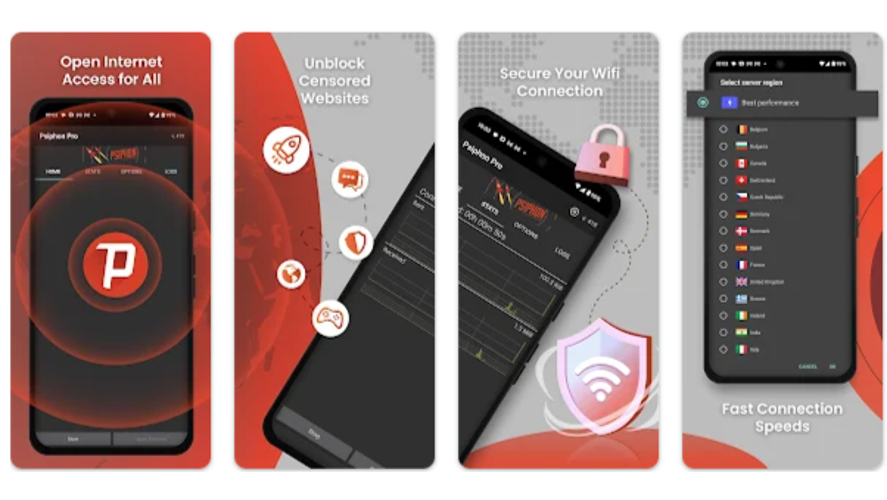
A prominent tool in their arsenal is Psiphon, a service that goes beyond the typical virtual private networks (VPNs).
Unlike regular VPNs which prioritize user privacy, Psiphon is specifically crafted to navigate through censorship barriers.
As Keith McManamen from Psiphon explains, the software employs a multi-protocol design that allows it to assess real-time network conditions effectively.
"By utilizing transports that mimic random noise or common web activity, we stay under the radar," he shared with TechRadar.
In a response to rising restrictions, the number of Iranians employing this free tool has surged dramatically.
Between January 1 and January 7 alone, an impressive 500,000 new users joined.
At its peak, nearly 9.6 million Iranians relied on the platform on a daily basis.
"When other VPNs begin to falter, people often turn to Psiphon for its resilience during tough times," McManamen noted.
Another unique aspect of Psiphon is its auxiliary tool, Psiphon Conduit.
This application empowers volunteers to transform their devices into relays, aiding users who are trying to access the broader internet.
While authorities can easily block major data centers, McManamen points out that it is quite challenging to eliminate connections tied to individual residential IP addresses.
Currently, there are thousands within the Iranian diaspora running these conduit relays to assist those still in Iran.
Despite this effort, the demand for reliable connections remains extremely high, with Psiphon reporting up to 26 million daily conduit connections from Iran during peak disruption times.
The digital landscape in Iran faces heavy restrictions,
yet innovative tools provide pathways to connection.
Snowflake, a feature within the Tor network,
creates a bridge using everyday web traffic.
It cleverly disguises data as common video calls,
a format too vital for authorities to block entirely.
This method leverages the widespread WebRTC protocol,
blending essential communications into the digital background.
Hundreds of thousands of temporary, rotating proxies form its backbone,
operating from standard home connections.
This constant flux of IP addresses
renders broad, systematic censorship efforts largely futile.
The approach ensures resilience through decentralization.
Access points like Webtunnel bridges offer another route,
available through dedicated request services.
These tools collectively empower users,
transforming everyday protocols into channels for free expression.
The ongoing adaptation showcases a persistent drive
to maintain open lines to the global internet.
Innovative Tools Against Censorship
Lantern's approach diverges from traditional VPNs,
utilizing a "proxyless" technique to bypass SNI-level blocks.
It employs TLS record fragmentation to slip past automated filters.
A volunteer-driven tool, Lantern Unbounded,
allows website visitors to become instant proxies with a click.
Though recent compatibility issues have temporarily reduced its visibility in Iran,
a new version promises enhanced capabilities.
This tool joins others like Psiphon and Tor,
all designed to circumvent censorship and uphold digital rights.
Their free access is sustained by third-party support,
notably from the U.S. Open Technology Fund.
However, this funding faces uncertainty due to budget cuts,
threatening vital services for millions of Iranian users.
Demand has surged dramatically,
highlighting the urgent need for financial stability.
Recent shifts in U.S. internet freedom budgets toward satellite terminals like Starlink
have sparked debate among digital rights experts.
While useful when terrestrial networks fail,
such connections can compromise user anonymity without VPN protection.
In contrast, VPNs funded by these programs
offer a more scalable and anonymous solution for the broader population,
proving essential in the ongoing struggle against internet restrictions.
In the face of tightening digital controls, the people of Iran demonstrate remarkable ingenuity, navigating online barriers with evolving tools.
Beyond standard VPNs, applications like Psiphon, Tor, and Lantern have become crucial, offering more robust resistance against state-level filtering.
These platforms not only provide access but represent a tangible form of international solidarity, enabling global support for digital freedom.
Developers remain vigilant and adaptive, with teams actively monitoring the landscape to counter new restrictions as they emerge.
Psiphon is exploring methods like 'whitelisted SNI,' a technique that mimics allowed traffic, which has shown promise in other censored environments.
The Tor Project expresses confidence in its Snowflake system, anticipating it can withstand even stringent national whitelisting scenarios.
Lantern's creator highlights a persistent truth: in every shutdown attempt, vulnerabilities and loopholes inevitably appear, offering pathways around blocks.
A critical consideration is the economic toll; implementing an absolute whitelist could severely disrupt Iran's domestic economy and digital infrastructure.
The enduring connection of Iranians to the global internet hinges on a balance between state control and the substantial costs of total isolation.
Continuous international funding and development for these circumvention technologies are vital to maintaining these essential digital lifelines.
Why People Need VPN Services to Unblock Porn
Why People Need VPN Services to unblock porn is rooted in the desire for online freedom and privacy. With VPN services, users can unblock porn by disguising their location and bypassing strict access controls set by various countries. This way, individuals can enjoy a wider range of adult content without compromising their privacy or facing unwanted surveillance.
Why Choose SafeShell VPN to Access Adult Content
If you're seeking a reliable solution to unblock porn sites and access region-restricted adult content, SafeShell VPN presents itself as an excellent option worth exploring. This premium service delivers numerous advantages that make it particularly well-suited for users who prioritize both accessibility and privacy when browsing adult platforms.
- SafeShell VPN provides exceptional connection speeds that ensure smooth streaming of high-quality adult videos without frustrating interruptions or quality drops, thanks to its advanced infrastructure designed to maintain performance even under heavy encryption.
- The unique App Mode functionality allows simultaneous access to adult content from different geographical regions, eliminating the need to constantly reconfigure server settings when you want to explore platforms from various countries.
- With the proprietary ShellGuard protocol, SafeShell VPN delivers military-grade encryption that keeps your browsing habits completely private, protecting you from ISP tracking, workplace monitoring, or any third-party surveillance that might compromise your personal privacy.
- The service accommodates up to five simultaneous device connections across all major operating systems including smartphones, tablets, computers, and smart TVs, ensuring you can securely access adult content on whichever device suits your preference at any given moment.
- SafeShell VPN's extensive server network spanning multiple continents makes it effortless to bypass geographical restrictions that prevent access to specific adult websites, giving you the freedom to explore content that would otherwise remain unavailable in your location.
How to Use SafeShell VPN to Unlock Porn Sites
To easily access adult content from various regions using SafeShell VPN, follow these steps:
- Start by subscribing to SafeShell VPN through its official website.
- Next, download and install the SafeShell VPN application on your device of choice.
- After installation, launch the app and choose the desired mode for your browsing needs.
- Then, select a server location from SafeShell's extensive list to mask your IP address.
- Finally, open your web browser and you can now browse adult sites securely and privately.

 English
 Arabic
 French
 Spanish
 Portuguese
 Deutsch
 Turkish
 Dutch
Dutch
 Russian
 Romaian
 Portuguese (Brazil)
 Greek
Greek